
In short: A data readiness check is a structured review you run before using a dataset for a report, model, dashboard, or decision. It surfaces quality, ownership, and governance gaps before they become trust issues. Most problems that make data “feel wrong” to stakeholders could have been caught at this stage.
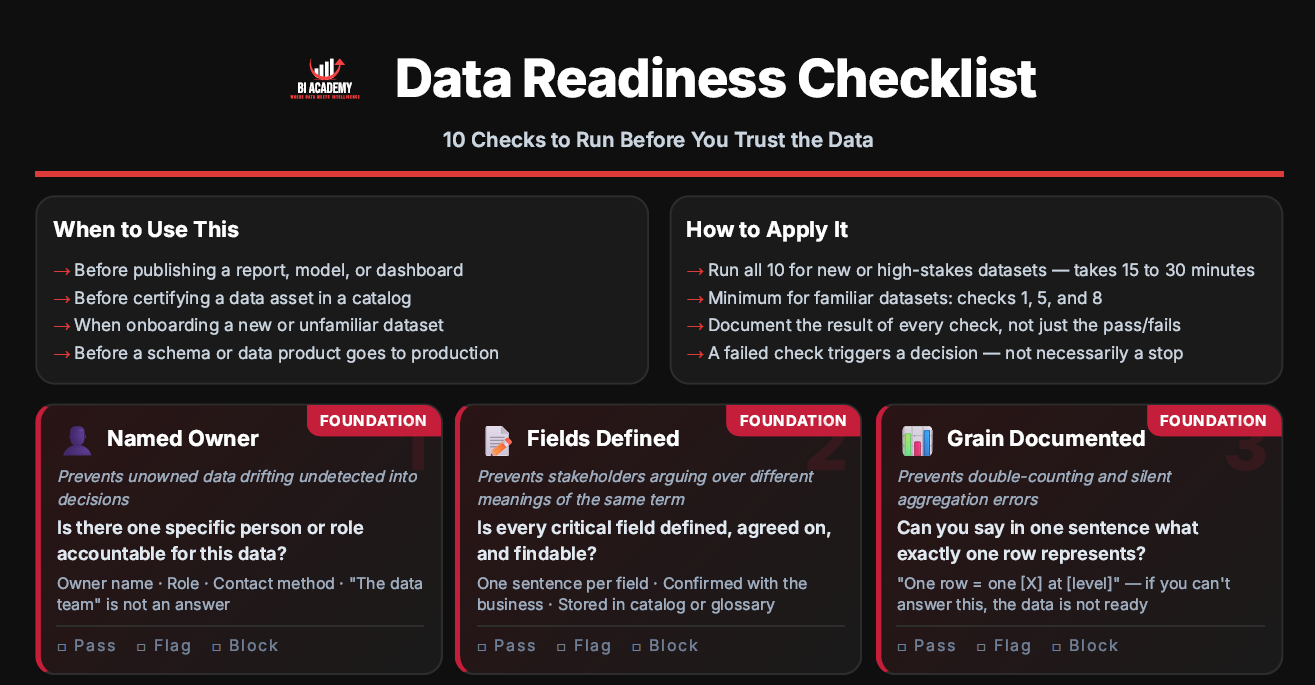
Why this check is worth doing every time
Most data trust problems are not discovered early. They surface when a stakeholder spots a number that doesn’t match, when an AI model produces a suspicious output, or when an audit reveals that no one can explain where a figure came from.
Running a readiness check takes 15 to 30 minutes for a familiar dataset. It takes longer for new or high-stakes ones. Either way, it is faster than rebuilding trust after a bad report lands in front of a leadership team.
The checklist below is tool-agnostic. Use it in a spreadsheet, a data catalog, a governance platform, or just a shared document. The format does not matter. The questions do.
Get the checklist for free
Sign up to the newsletter for free and receive the ready to use template checklist for free.
Plus: Every month I send one practical checklist or template.
No noise, no ads – just something you can use.
Note: You will also receive the download link if you have already subscribed to the newsletter!